
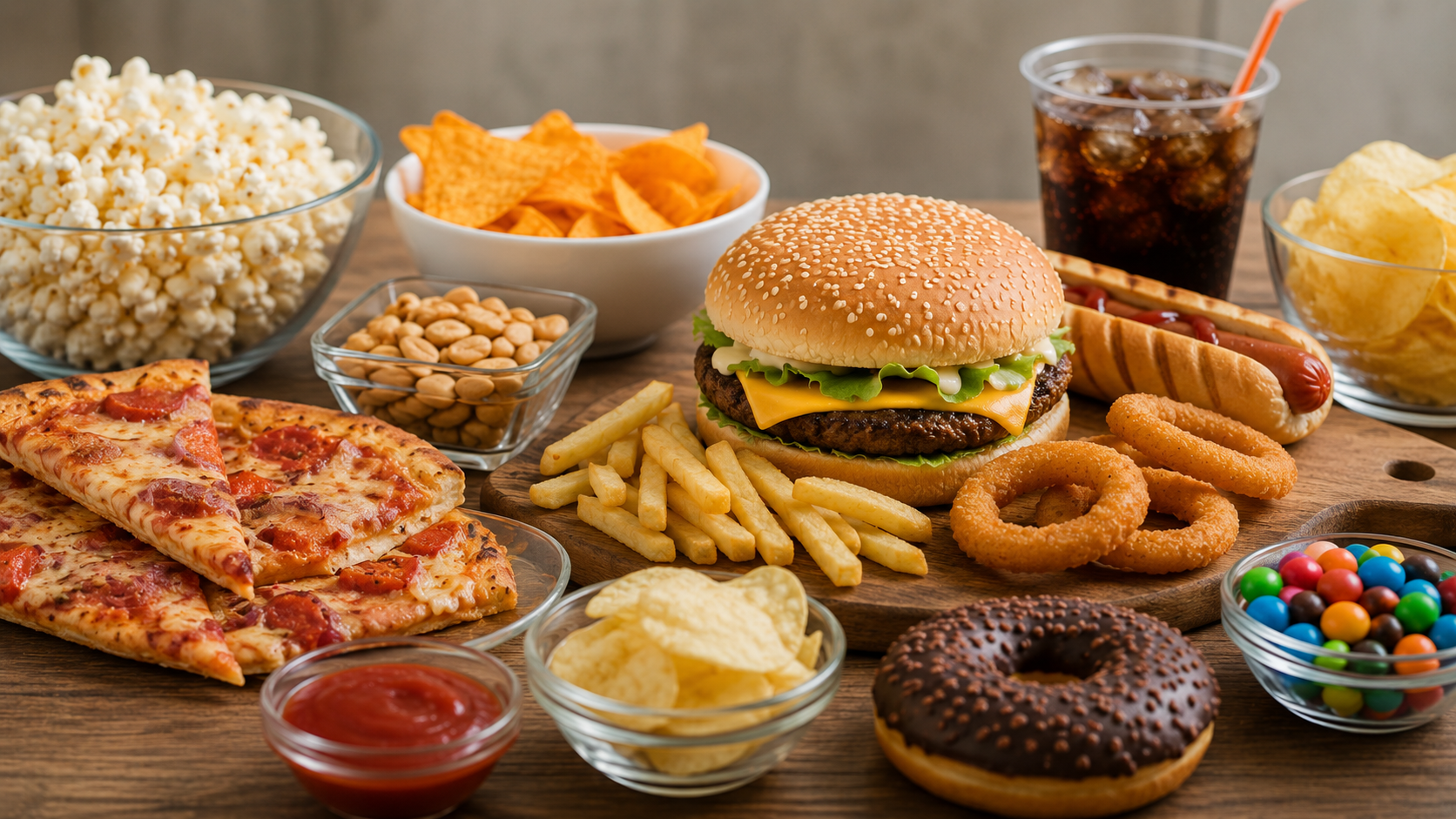
Modern diets have changed dramatically over the last century.
In many industrialized countries, traditional eating patterns rich in fiber and minimally processed foods have increasingly been replaced by highly processed, calorie-dense diets often referred to as the Western diet.
This dietary pattern is typically characterized by:
-
high intake of ultra-processed foods
-
refined sugars
-
saturated fats
-
low fiber consumption
-
low microbial food diversity
At the same time, scientists have become increasingly interested in how these dietary shifts may influence the gut microbiome and intestinal barrier integrity.
And while microbiome science still has many unanswered questions, one thing is becoming increasingly clear:
Diet has a major influence on the microbial ecosystem living inside the gut.
The Gut Barrier Depends on a Complex Ecosystem
The intestinal barrier is not just a physical wall.
It is a highly dynamic system involving:
-
intestinal epithelial cells
-
mucus layers
-
immune signaling
-
microbial metabolites
-
tight junction proteins
-
the gut microbiome itself¹
Scientists now understand that the gut microbiome plays an important role in maintaining this barrier environment.
Certain microbial communities help produce metabolites such as short-chain fatty acids, including butyrate, which are closely linked to intestinal epithelial health².
This is one reason why researchers are increasingly studying how modern dietary patterns may alter microbial ecosystems and gut barrier regulation.
Low Fiber Intake May Be One of the Biggest Problems
One of the defining features of many Western diets is low dietary fiber intake.
Fiber is not only important for digestion, it also serves as fuel for many gut microorganisms. When microbes ferment dietary fibers, they produce metabolites such as short-chain fatty acids that may help support intestinal barrier function³.
Several studies suggest that low-fiber diets may reduce microbial diversity and shift the balance of the gut ecosystem.
In experimental models, severe fiber depletion has even been associated with increased degradation of the intestinal mucus layer by certain microorganisms⁴.
This does not mean that one low-fiber meal suddenly “damages” the gut barrier. But over long periods, dietary patterns may influence how stable and diverse the microbial ecosystem becomes.
Ultra-Processed Foods and the Microbiome
Modern Western diets are also often rich in ultra-processed foods.
These foods frequently contain:
-
refined carbohydrates
-
emulsifiers
-
additives
-
high sugar content
-
altered fat composition
-
lower natural fiber complexity
Researchers are actively investigating how some of these components may interact with the gut microbiome and intestinal permeability⁵.
For example, certain food additives and emulsifiers have been studied for their potential influence on microbial composition and mucus layer interactions in experimental models.
At the same time, scientists emphasize that human nutrition is extremely complex. The effects of diet likely depend not on one single ingredient, but on long-term dietary patterns, microbial diversity, genetics, and lifestyle factors.
The Western Diet May Reduce Microbial Diversity
One recurring theme in microbiome research is microbial diversity.
Traditional diets rich in plant fibers and diverse natural foods are often associated with greater microbial diversity compared to highly industrialized Western dietary patterns⁶.
Why does this matter?
Because diverse microbial ecosystems are generally considered more stable and resilient. Reduced microbial diversity has been investigated in relation to multiple inflammatory and metabolic conditions, although causality remains complex and not fully understood.
Scientists increasingly view the microbiome as an ecological system:
the less ecological diversity exists, the less resilient the system may become.
Antibiotics + Western Diet: A Double Pressure on the Microbiome?
Another emerging topic is the interaction between diet and antibiotics.
Antibiotics can alter microbial composition significantly. If this occurs alongside long-term low-fiber dietary patterns, some researchers speculate that microbiome recovery may become more difficult⁷.
This area is still being actively studied, but it highlights an important idea:
The microbiome is shaped not by one isolated factor, but by cumulative environmental pressures over time.
Diet, stress, sleep, exercise, medications, infections, and lifestyle all interact within the same microbial ecosystem.
Modern Microbiome Research Is Moving Beyond Simple Food Lists
One of the biggest misconceptions online is the idea that gut health can be reduced to “good foods” and “bad foods.”
Modern microbiome science is much more nuanced.
Researchers increasingly focus on:
-
dietary patterns
-
microbial ecosystem stability
-
fiber diversity
-
food complexity
-
microbial interactions
-
metabolic function
This is also why modern microbiome analysis increasingly uses high-resolution methods such as shotgun metagenomics.
Instead of only identifying broad bacterial groups, researchers can now investigate:
-
microbial diversity
-
species-level composition
-
functional pathways
-
resistance-associated genes
-
broader ecosystem patterns
The field is gradually moving from simplistic narratives toward systems-level understanding.
Scientific References
-
Di Vincenzo F et al. Gut microbiota, intestinal permeability, and systemic inflammation: a narrative review. Internal and Emergency Medicine. 2023.
-
Parada Venegas D et al. Short Chain Fatty Acids (SCFAs)-mediated gut epithelial and immune regulation. Frontiers in Immunology. 2019.
-
Makki K et al. The Impact of Dietary Fiber on Gut Microbiota in Host Health and Disease. Cell Host & Microbe. 2018.
-
Desai MS et al. A Dietary Fiber-Deprived Gut Microbiota Degrades the Colonic Mucus Barrier. Cell. 2016.
-
Chassaing B et al. Dietary emulsifiers impact the mouse gut microbiota promoting colitis and metabolic syndrome. Nature. 2015.
-
Sonnenburg ED, Sonnenburg JL. Starving our microbial self: the deleterious consequences of a diet deficient in microbiota-accessible carbohydrates. Cell Metabolism. 2014.
-
Dethlefsen L, Relman DA. Incomplete recovery and individualized responses of the human distal gut microbiota to repeated antibiotic perturbation. PNAS. 2011.
Teilen:
Leaky Gut: What Scientists Actually Agree On